Available courses

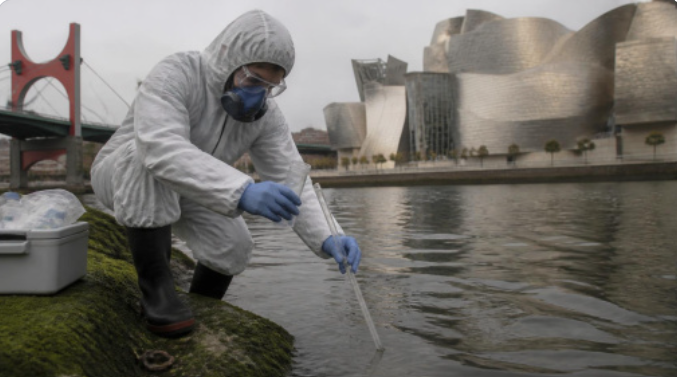
Students are recruited as members of a multidisciplinary emergency research task force after rumours spread that a contagious disease has contaminated the city's drinking water. Social media is flooded with contradictory information, local authorities are under pressure, and the mayor has only one hour to decide whether to declare a public health emergency. The team must investigate the available evidence, identify trustworthy information, collaborate to interpret conflicting data, and produce an evidence-based recommendation before misinformation causes unnecessary panic. Although the narrative is fictional, it mirrors real situations where research informs public decision-making.


Students are recruited as members of a multidisciplinary emergency research task force after rumours spread that a contagious disease has contaminated the city's drinking water. Social media is flooded with contradictory information, local authorities are under pressure, and the mayor has only one hour to decide whether to declare a public health emergency. The team must investigate the available evidence, identify trustworthy information, collaborate to interpret conflicting data, and produce an evidence-based recommendation before misinformation causes unnecessary panic. Although the narrative is fictional, it mirrors real situations where research informs public decision-making.

Students are recruited as members of a multidisciplinary emergency research task force after rumours spread that a contagious disease has contaminated the city's drinking water. Social media is flooded with contradictory information, local authorities are under pressure, and the mayor has only one hour to decide whether to declare a public health emergency. The team must investigate the available evidence, identify trustworthy information, collaborate to interpret conflicting data, and produce an evidence-based recommendation before misinformation causes unnecessary panic. Although the narrative is fictional, it mirrors real situations where research informs public decision-making.

Students are recruited as members of a multidisciplinary emergency research task force after rumours spread that a contagious disease has contaminated the city's drinking water. Social media is flooded with contradictory information, local authorities are under pressure, and the mayor has only one hour to decide whether to declare a public health emergency. The team must investigate the available evidence, identify trustworthy information, collaborate to interpret conflicting data, and produce an evidence-based recommendation before misinformation causes unnecessary panic. Although the narrative is fictional, it mirrors real situations where research informs public decision-making.
You are part of a Formula 1 team’s engineering staff. Just minutes before the start of the decisive race, you are in the garage with the car when the pit lane gates suddenly close due to a system failure. The driver is already seated in the cockpit, but the car’s computer (ECU) has frozen, the technical systems are unresponsive, and the engine is completely silent.

This is a demo digital escape room serving to brainstorm and perform codesign session.

ROOM 5 – “The Research System”

Level: Expert / Meta-competence

Narrative:
Participants are now designers of research culture.

Challenge type

  • System-level puzzles
  • Participants redesign:
    • A lab policy
    • A supervision model
    • An open-science strategy

Competence focus:
Integration of all 7 areas at institutional level.

🎯 Escape by assembling a coherent research ecosystem, not individual answers.

ROOM 4 – “The Controversial Project”

Level: Expert

Narrative:
A high-impact, high-risk project is under scrutiny from funders, ethics boards, and the public.

Twist

  • No single correct solution
  • Teams must defend decisions to unlock

Expert tasks include:

  • Ethical trade-offs
  • Stakeholder mapping
  • Crisis communication
  • Open science vs commercialisation conflict

🗝 Lock opens only if:

  • Team consensus reached
  • QR form submitted with reasoning
  • Facilitator validates logic

ROOM 3 – “The Data Dilemma”

Level: Advanced

Narrative:
A dataset is ready, but something is very wrong.

Key Materials

  • Printed datasets
  • USB stick with CSV (optional)
  • QR code → interactive form

Advanced-level challenges:

  • Cognitive: Identify bias in sampling
  • Self-management: Decide what to fix first with limited resources
  • Research management: Write a mini data-management plan (fill blanks)
  • Working with others: Resolve disagreement between PI & data steward
  • Communication: Choose best data visualisation (printed charts)
  • Integrity: Fabrication vs error vs acceptable cleaning
  • Open science: Decide what can/cannot be shared and why

🧠 Escape requires justification, not only right answers.

ROOM 2 – “The Broken Literature Review”

Level: Intermediate

Narrative:
A literature review draft is flawed. Participants must fix it before submission.

Highlights

  • Uses printed articles, fake citations, QR to Google Scholar screenshots

Example challenges (one per competence):

  • Cognitive: Identify strongest argument from 3 papers
  • Self-management: Prioritise revisions under deadline pressure
  • Research management: Choose correct database for each discipline
  • Working with others: Decide authorship order from contribution cards
  • Communication: Rewrite a confusing paragraph (match clearer version)
  • Integrity: Detect citation manipulation
  • Open science: Choose appropriate licence (CC-BY, CC-BY-NC)

🧩 Output: Combination lock on a “journal submission portal” box

ROOM 1 – “The Lost Research Notebook”

Level: Foundation

Narrative:
A first-year researcher has vanished, leaving behind a messy notebook. Participants must reconstruct basic research logic to unlock the box.

Competence Challenges

  1. Cognitive abilities
    📄 Task: Match research questions to hypotheses
  • Cards with vague questions and possible hypotheses
  • Correct matches reveal a number written on the back
  1. Self-management
    ⏱ Task: Time-planning puzzle
  • A weekly planner with missing slots
  • Participants must allocate tasks realistically
  • Correct schedule = UV pen reveals a code
  1. Research management
    🗂 Task: Identify research stages
  • Cut-up steps (literature review, data collection, etc.)
  • Correct order opens a 3-digit lock
  1. Working with others
    🤝 Task: Role recognition
  • Cards describing team conflicts
  • Match conflict → appropriate collaborator role
  1. Communication
    ✍️ Task: Abstract vs title
  • Match abstracts to correct titles
  • QR code confirms correct answers
  1. Research integrity & ethics
    ⚖️ Task: Spot the problem
  • Short scenarios (plagiarism, consent missing)
  • Circle the ethical issue → letters spell a word
  1. Open science
    🌍 Task: Open vs closed
  • Sort cards into “open” and “not open” practices
  • Back of correct pile gives final digit

✅ Escape outcome: Open a locked notebook with next-room clue